In a world where coffee costs more than a small fortune and inflation seems to have taken a permanent vacation, one question keeps popping up: when will pennies stop being made? These tiny coins, once the pride of American currency, now seem to gather more dust than value. With their diminishing purchasing power, many wonder if it’s time to bid farewell to these copper-coated relics.
Imagine a future where pockets are lighter and wallets are free of those pesky pennies. It sounds like a dream, right? But as the debate rages on, the fate of the penny hangs in the balance. Will it be a slow fade into obscurity or a dramatic exit stage left? Buckle up as we dive into the quirky world of currency, exploring the potential end of the penny and what that means for everyday life.
Overview of the Penny
The penny, minted in the United States since 1792, originally represented one cent of value. Its composition has changed over time, transitioning from copper to zinc and copper alloys. Production of the penny peaked in the 1940s when it was widely used for everyday transactions. Since then, usage has steadily declined.
Many factors contribute to the penny’s decreasing relevance. Inflation has eroded its purchasing power, making it less useful in daily transactions. People frequently round prices to the nearest five or ten cents, which diminishes the need for pennies. Additionally, the cost of producing a penny now exceeds its actual value, raising questions about the economic viability of continuing its minting.
In 2021, nearly 4.4 billion pennies were minted, but consumer behavior indicates a shift. Surveys show that 70% of Americans favor halting penny production, acknowledging its limited utility. Retailers are also adapting, with many opting to eliminate pennies from their cash registers.
Debate exists around the implications of phasing out the penny. Supporters argue that it could simplify transactions and reduce costs for the U.S. Mint. Opponents express concerns about the cultural significance of the penny and the impact on low-income individuals who rely on exact change.
Legislation has been proposed to evaluate the future of the penny, yet no definitive action has taken place. The ongoing conversation reflects broader trends in currency use and the evolution of monetary systems. As the landscape of cash transactions continues to change, the penny’s future remains uncertain.
The History of Pennies
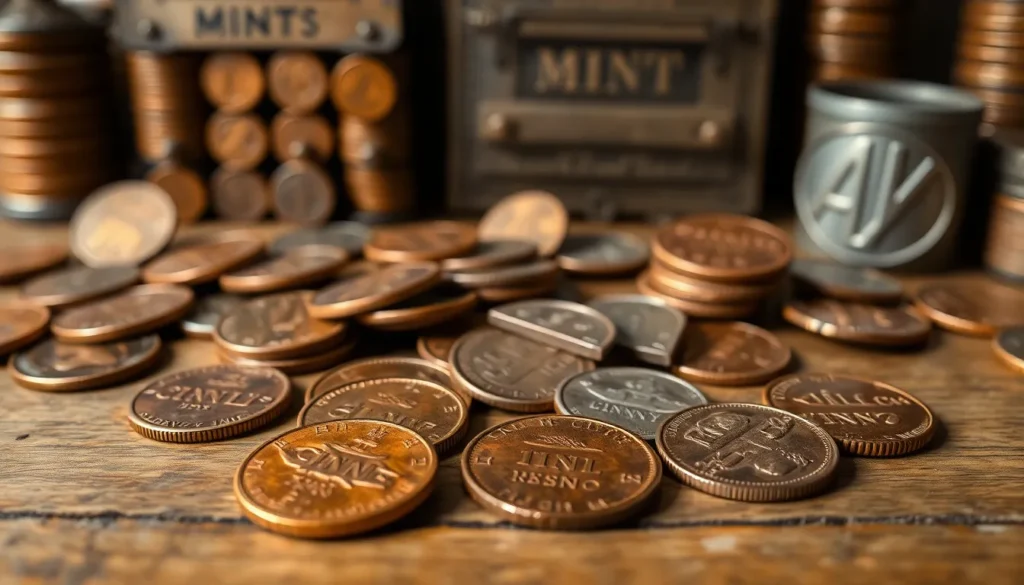
The penny’s journey began with its introduction in the United States in 1792. Legal authorization established the copper coin as part of the nation’s currency system.
Introduction of the Penny
Minting started with the first pennies made from pure copper, reflecting the value of one cent. The Coinage Act set its specifications, ensuring standardization across the nation’s currency. During its early years, the penny featured designs celebrating American values, including Liberty and agricultural motifs.
Key Changes Over the Years
Composition of the penny evolved significantly over time. By the 1830s, copper prices increased, prompting a shift to a bronze alloy. World War II saw further changes; the wartime need for copper led to the introduction of steel pennies in 1943. In recent decades, the penny’s composition shifted to primarily zinc, with a thin copper plating, due to rising material costs. Minting volume peaked in the 1940s, while the penny’s purchasing power has steadily decreased, leading to a decline in its everyday use.
Current Manufacturing of Pennies
The U.S. Mint continues to produce pennies despite their declining usage and relevance in today’s economy. This ongoing production raises questions about sustainability and efficiency.
Production Statistics
In 2021, nearly 4.4 billion pennies were minted, highlighting that production still occurs at a significant scale. As a result of this manufacturing volume, the Mint produced approximately 40% of all coins. While the figures indicate a high output, surveys reveal that 70% of Americans favor stopping penny production. Many consumers express a desire to move away from this low-denomination coin due to its limited purchasing power.
Cost of Production vs. Face Value
Producing a penny costs considerably more than its face value. It takes about 2.1 cents to manufacture each penny, driven by rising material and labor costs. This discrepancy between production cost and the coin’s value prompts concern among both taxpayers and lawmakers. Economic analyses suggest that every penny minted results in a loss to the U.S. Mint, making the case for reevaluating its production even stronger. As cash transactions evolve, the economic rationale for continuing to mint pennies remains increasingly questionable.
Arguments for Eliminating Pennies
The debate over the penny’s future centers on several compelling arguments. Economic factors and environmental considerations play crucial roles in this discussion.
Economic Considerations
The cost of producing a penny currently exceeds its value, with manufacturing expenses averaging 2.1 cents per coin. This discrepancy leads to losses for the U.S. Mint, which produced nearly 4.4 billion pennies in 2021. Simplifying transactions by eliminating pennies could also streamline cash interactions for both consumers and retailers. According to surveys, 70% of Americans support halting penny production, indicating widespread public sentiment against its continued minting. Many retailers increasingly round prices to the nearest five or ten cents to facilitate smoother transactions while avoiding pennies altogether.
Environmental Impact
Production of pennies generates excess waste and consumes valuable resources. Manufacturing involves not only raw materials but also significant energy expenditure, contributing to carbon emissions. By discontinuing penny production, the U.S. could reduce its overall environmental footprint, making currency systems more sustainable. The shift towards digital transactions further diminishes the need for physical coins, making the penny’s continued existence increasingly unnecessary. Reducing both minting and circulation of pennies aligns with efforts to promote eco-friendly practices in monetary systems.
Public Opinion on Pennies
Public sentiment regarding pennies reflects a significant shift in attitudes towards currency.
Surveys and Studies
Surveys indicate that 70% of Americans favor ending penny production. Studies conducted by various organizations reveal that many consumers find minimal use for the one-cent coin, especially as prices round to the nearest five or ten cents. Additional research shows that frequent handling of pennies annoys consumers, contributing to the belief that eliminating the coin could streamline transactions. Financial experts reinforce this perspective by emphasizing the growing costs of minting pennies, as it currently costs about 2.1 cents to produce each one. Clear patterns emerge, demonstrating that public opinion aligns with a future where pennies no longer hold a place in everyday transactions.
Case Studies from Other Countries
Countries like Canada and Australia provide instructive case studies on eliminating low-denomination coins. Canada ceased circulation of its penny in 2013 due to similar economic factors, leading to a smoother pricing system. Reports indicated that retailers adapted quickly, employing simple rounding practices, which enhanced transaction efficiency. Australia followed suit in 1992, abolishing the one-cent and two-cent coins. This decision simplified cash transactions and showed no adverse effects on the economy. Observations from these nations reveal that discontinuing low-value coins can yield positive results, aligning with consumer preferences for more convenient and efficient payment methods.
Possible Future of Pennies
The future of pennies faces uncertainty as their relevance declines. Economic pressures have intensified discussions about potentially ceasing their production. Pennies cost about 2.1 cents to manufacture, exceeding their actual value. Current practices show the U.S. Mint produces approximately 40% of all coins, despite the financial losses incurred.
Consumer sentiment leans heavily toward eliminating pennies, with about 70% of Americans supporting this move. Retailers find that rounding prices enhances transaction efficiency, making it a common practice. Statistics reveal that countries like Canada and Australia successfully phased out low-denomination coins, leading to smoother transactions.
Cultural significance remains a point of contention though some believe eliminating pennies could simplify everyday purchases. Advocacy for this change often highlights the environmental impact of producing and transporting these coins. In light of technological advancements, a shift toward digital transactions aligns with the growing sentiment against maintaining low-value coins.
Legislation proposing evaluations of penny production has seen no significant action, illustrating broader trends in currency usage. Public discourse increasingly favors a transition away from the penny, aligning economic and social considerations. As these discussions continue, the fate of the penny remains tied to evolving perceptions of its utility in modern transactions.
The future of the penny seems increasingly uncertain as economic realities and public sentiment align against its continued production. With rising costs and a growing preference for digital transactions, the penny’s role in everyday commerce is rapidly diminishing.
As discussions evolve around its elimination, it’s clear that many Americans recognize the need for change. The environmental impact of penny production and the financial losses incurred by the U.S. Mint further bolster the argument for phasing out this once-cherished coin.
While the penny has a rich history, its relevance in modern society is being called into question. The shift toward a more efficient currency system may soon render the penny a relic of the past.